Tuesday, February 12, 2019

P'Burg Nickname Directory

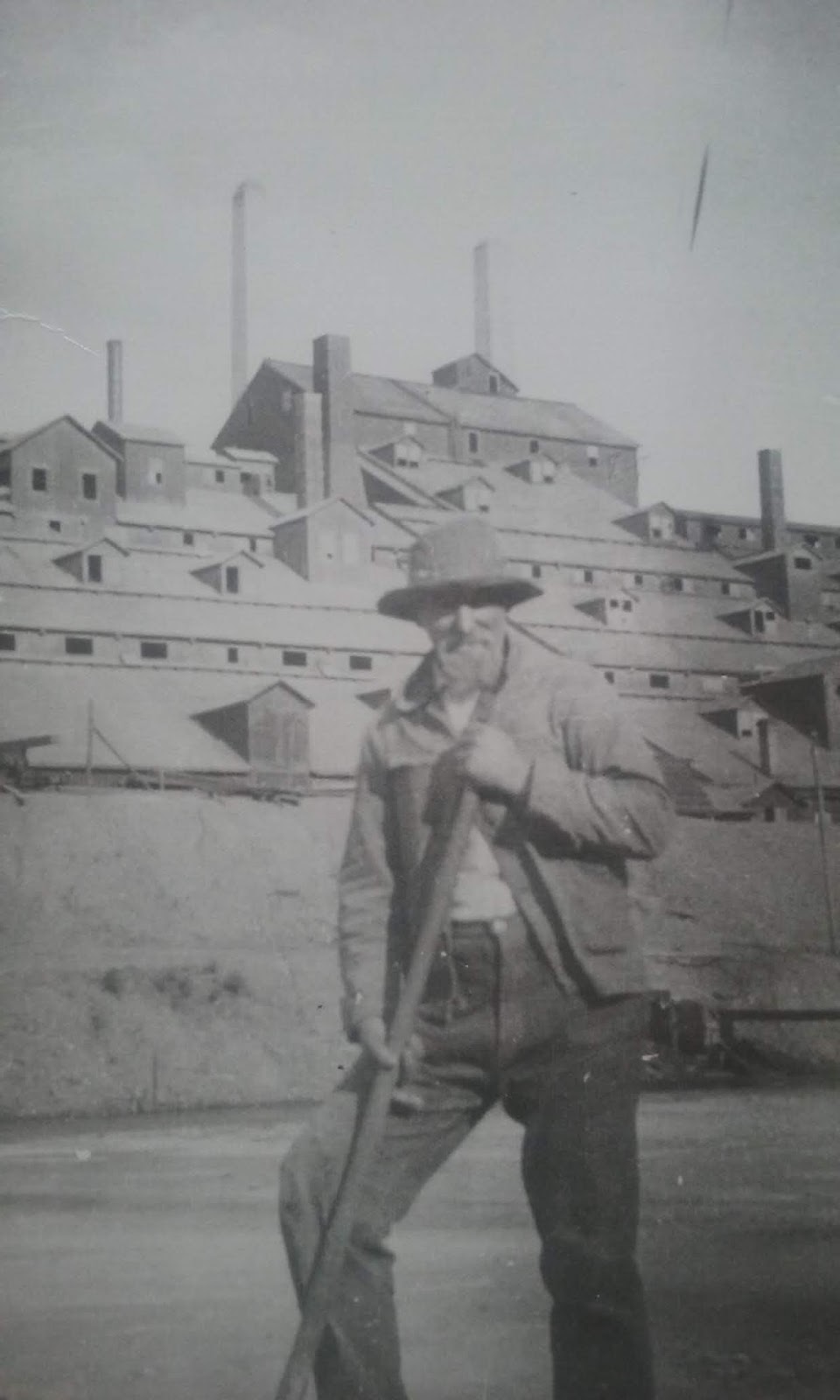
                                              In Memory of Chum

 In December, 2018, a native of Granite county (Bob Sanders), suggested on the Facebook group “I grew up in Philipsburg” that it would be fun to name all the nicknames known to the group but not identify the real name. Within a matter of a couple of weeks there were almost 400 names given. As the days went by names continued to be submitted. 

We know there was a tee-shirt sold for one of the Flint Creek Valley Days with a number of nicknames but at this time I have not viewed one of these shirts. Since the nicknames have been provided we have attempted to find out the given name and story behind each nickname. Obviously this will be a work in progress as some people are not able to recall the story. 

During the past most nicknames were usually accepted lovingly and not considered bullying or derogatory, which is not the case in this politically correct generation. So this article is published with the intent to inform and with great care to not embarrass or intimidate anyone or use obscene or derogatory names. Any person who asked their nickname not to be published were respected for that wish. 

I reviewed historical articles and added all of the nicknames found from the early history also. 

Group A 

Aeagle-- Jimmy Howard, because he had difficulty pronouncing the word eagle. 
Angel Boy 
Ajax-John Michael Courtney; named by Scott from Ajax Nerd in the Driver Ed film. 
A.R.- Senator Allan R. Dearborn. He was also a Pharmacist at Doe’s Drugstore in 1888-1911. (1856-1915) 
Archie-Eddy Moore 
Ashtray-George Andrews was a Pastor’s son and lived in the ‘Burg about 1963-64. He had a flat-top haircut and an “upper classman” chose to stub his cigarette out on the flat top…thus the name ashtray.  
Group B 

Babs-Barbara Miller 
Baldy-Larry Baldwin 
Barney Fife- Art Achershot when he was the Town policeman 
Barney- Clyde Pickett who played Santa Claus from 1950’s to 1970’s 
Barney- Patrick Dougherty a miner that owned a lot of property on Ross’ Fork of Rock Creek on the road to Medicine Lake (!851-1916) 
Barry-Joe Carnahan 
Basco-Don Schroeder
Beaner-Regina Leistko 
Bear aka Teddy bear- Barry Benson 
Bear-Gene Salois 
Beaver-Steve Immenschuh 
Beck-Rebecca Hess, because her mother was also Rebecca 
Beetle-Lee Page Jr. (1940-2018)
Beeler-Joe Braach 
Bert-George Schoonover
Bert-Robert Gillies rancher on Rock Creek 1871-1930
Bessie-Doy (George) Winninghoff when he and Carroll Huffman (Jessie) spent time on Rock Creek Bessie- Elizabeth Butler 
Bessie- Elizabeth Sprague McRae, mother of Beth (Elizabeth) McRae Winninghoff. 
Beth-Elizabeth McRae Winninghoff (1907-1998) 
Bibs-Eugene Noreen 
Big Bill-Bill Schneider 
Big Daddy- Frank Winninghoff (1861-1941) 
Big Jake- Steve Jacobson 
Big June- Mrs. Al Unger who was way smaller in stature than Little June Mrs. John Unger. 
Big Mac- Angus Alexander McDonald usually called A.A. Was Mayor of Philipsburg and owner of the McDonald Opera House with his wife Susie.(1842-1910) 
Big Pete-P.H. McDonald (1851-1926) 
Big Vic-A miner At ? 
B.J.-Barbara Jean McLeod 
Black Jack- Mike Conn from Hall who wrote an English Composition paper on a gambling episode with a man named Black Jack. 

Blackie- Fritz Leuck who was sheriff in 1952 and 1953 and had jet black hair and mustache. 
Blacky-Ned Neu because of his hair and mustache. 
Blinky-Cal Mazza 
Bobcat-T.R. “Bus” Hess (1922-2011) 
Boiled Pine Squirrels-Bob Munis 
Booger-Justin Braach 
Boom Boom-Leslie Smith when she was dating Alan Boomer 
Boom Boom-Jackie Boomer 
Boomer –Jim Lane because of his booming voice.
Boomer-John Roseboom
Bone-Chuck David Williams
Breaker by the Acre- Bill Baker 
Brocky-Fred C. Barocco a Stone Mason that worked on Georgetown Dam. He lived his later years with Spasse Wacheff until Spasse died. (1878-1963) 

Brooklyn- “Brook” and “Brookie” Tom Schneider 
Brother-Lee Page II 
Bubble head-Gordon Owsley
Bucko- K.L. Staninger owner of Eagle Canyon Ranch
Bucky-Lyle Graham 
Buckshot- Art Achershot 
Bud-Colleen Rose 
Bud- Ernie Mc Laughlin 
Bud Joe Kau
Buddy- Bud Braach 
Buddy- William Hunter 
Bugs- Terry Mickey 
Buggy- Terry Mickey 
Buggy-Bobby Tucker 
Bulldog- John Kennedy Olson because of his features and feisty demeanor 
Bullfrog- Martha Bohrnsen Brandon after the song “Freddie and the Bullfrog.” 
Bull Trout-George Mungas 
Bum-Jack Byam 
Bumbo-Bernard LeRoy 
Bumps-Bill Butler 
Bumbler- Bob Lane 
Bumpster- Jack Byam “The Bum when he fell into the Dumpster”  
Bunny- Delores Carey Furham 
Bus- T.R. Hess, shortened from nickname Buster when he was a toddler. Named after his grandfather. (1922-2011) 

Buster-George W. Metcalf 
Buster- Forest Merrifield lived by Porter’s Corner and drove the Rock Creek School Bus route. (1919-1974) 
Butch-Bob Untinen 
Butch-Richard Johnson (1950’s) 
Buzzard Queen-Jean Breeden who owned the Hungry Buzzard Bar after it was the Silver Tavern. She was also called Mean Jean and was married to David McRae for a short time. 
By Golly- Tommy Churchwell the town Barber 

 Group C 

Cabbage- Ed Lawry 
Cactus-Jack Courtney 
Canner Joe-Sid Willis who picked up all the dead animals and sold the meat to the cannery for dog food and the hides to Pacific Fur. 

Carbide- Wilbur Storer brother of Oliver (Poot) 
Captain-John G, McLean (1830-1919) 
Captain-Larry Veis 
Captain Cape-Duane Cape who was a Captain in the Army in Vietnam. 
Captain Video-Tom Guck 
Cart- Clarence Hamilton half brother of Roy Hamilton  
Cat-Dave McRae 
Ceal-Cecilia Lyon Haggard 
Carebear-Carey Aidy (?)
Charger- Brian Challinor 
Chauchy-Chris Goldsby
Cheeseburger-Bob Harris 
Cheeseburger- Johnny Welch 
Chick-Susan Kreig 
Chicken Coop- Henry ? who stole chickens during the depression and served time in jail for it.  
Chief-Bill Metesh 
Chili-Howard Naef 
Chipmunk-James Maehl 
Choop-Chris Godkin/Boydston 
Chrome Dome-Loren Luthje after he lost his hair 
Chuck—Charles McLure III 
Chuck-Charles E. Metcalf 
Chuckles-Chuck (Charles) Houtz 
Chum- Jerry Churchwell name used by his dad Tommy 
Chunk-Doug Benson
Circus Jim- James L. Hollenbeck who worked at the Puller Ranch on Rock Creek. He died from complications of a stab wound received at the Rupp /Greenheck Slaughter house in 1910.

Cleve-Cleveland A. Metcalf (1889-1972) 
Clevie-Cleveland R. Metcalf (1920-1961) 
Clod Ankle-Kenny Mehr 
Clyde-Shannon D. Heimark 
Coach Cleats-David Metesh 
Coke-Tony Kulaski  
Compressor-Tom Page when working at the Taylor and Knapp Mill 
Conklin-“Conk” Dan Schneider  CooCoo-Bruce Mason 
Cookie- Joan Webster Morrison wife of Dan 
Cookie-Susanne Morrison wife of Earl Goodsell
Cord-Larry Bowen
Corky- Harry G. Bentz Jr. because no one wanted to call him junior. 
Corky- Gary Haile named by his Grandfather Carroll Huffman from the cartoon Gasoline Alley.  Cowboy Joe-Joe Johnson taught kids how to count and say other things in Spanish.

Crab Apple-Jack Carico who ate anything he found in his traps. Lived on what later became the Fred Splitt then Lyon Place located right before Uncle Tom’s Cabin/Dance Hall on Middle Fork. Feuded when drunk with his room-mate Harry Smith re-fighting the Civil-War as Crab Apple was from the South and Harry from the north. They would hang from their saddles and shoot over the horses at each other as the horses raced across the field. He ran barefoot in forty below Zero weather to the Sandin ranch when he woke up from one of their drunks to find Harry froze to death. His family sent him money every year to come east to visit and he would make it too Butte then turn back home. One year he went further and died on the train (probably in the 30’s). No death records have been found (Stories from T.R. ‘Bus” Hess) 

Cucumber-? Joe Costello 
Curley- Dan Carlin 

Group D 

Dan-Andrew Glover married Rosella Carnegie and they ran the County Farm and Poor-House 
Dana Banana-Dana Gibson (Vincent) 
Dan-Herman Crowly 
Deacon-Delbert Yardly 
Dee-Delores Dunkerson 
Dee Dee-Dorothy Crnevich 
Deebert-Dee Schroeder 
Dettle-Dan McKenzie, His twin brother died shortly after birth; son of Toasty and Anna Mason and brother of Rod. 
Dewey-Kevin Learn 
Diamond Bill-Bill Hansen who owned Hansen Core Drilling 
Dicker- Richard Metesh 
Dingo-David Kroger
DK-Donna Kay Morrison 
Doc-Josiah Merrell Philipsburg Merchant and Investor.(d.1913) 
Doc-John P. Cunningham MD 
Doe-Dorothy LeRoy Moran Owens (see Dot below) 
Doe Doe-Doris Metesh
Dogman-David Riggs
Dolly-Dorothy M. (August 29, 1915-July 6, 2001) married to Leland Page Sr. 
Dooley- Adolph Andre 
Dot- Dorothy LeRoy Moran Owens owned a Soda Fountain by the White Front in the “50-60’s Double or Nothing-B.G. Paige 
Doughnut-Louis Mehr 
Doy and Do-ey-George Winninghoff worked with brothers Heck and Heinie at Winninghoff Motors until he bought the Greenheck ranch on Flint Creek (1897-1986) 

Duckboy-Rick Reh 
Dunk- Duncan McRae 
Dunk-Sheriff Scott Dunkerson
Dutch- Margery Winninghoff Metesh 

Group E 

Eddie Spaghetti-Ed Roseboom 
Egg Tycoon-Curtis Smith when he had a massive egg production company 
Ego-John Howard 
Elmer-Louis Salois 
Elroy-Ron Graham 
Emersome-Karen Anderson 
Ernie-Brett Hamilton 

 Group F 

Falcon-Dave Metesh 
Fan-Frances Titus Harrington McKenzie County Historian (1881-1961) 
Father Edgar- Tim Edgar 
Fat Pat-Pat Tatlinger 
Fats-Guy Kneale 
Festus-Paul Coble 
Festus Vince Fessler 
Fet- Winnifred Sandin Bentz Bauer 
Fink-Tim Mickey 
Finn-Harold Marjamaa 
Fish- Edward Morrison 
Fish-Tammy Schneider 
Fisher Jack from the Hogback- Joseph Case who was nursed back to health from Typhoid Fever by Annie Morgan on her homestead which is now a Forest Service cabin on Lower Rock Creek. (1846-1930) 

Flash-Spencer Huffman
Flap jack-Jack Minkler 
Flintstone-Robert Maehl 
Flip-Van Neitz 
Flossie –Florence Morrison McCale 
Fog Horn- Neil McDonald because of his deep voice. he was over fifty when he joined the Canadian Military because the US said he was too old. He died 1923 and was the father of Hugh J., Axel and Mrs. Hugh S. McDonald. 

Foghorn-Tom Schneider 
Foof-Justin Flahuarty 
Fosdick-Bobby LeRoy 
Foxie-Herman Lindstadt who owned the Granite Garage and sold Overland cars (1916), located across from the Hospital and next to Mrs. Chantry on Sansome. He and wife May VanNorman had Irene (Parker) and Connie who married Ed Kahoe, thus it became the Kahoe Garage 

Frankie-Frances Porter Merrifield 
Fred-Robert Maehl 
Freddy-Robert Maehl 
Freddy-Spencer Huffman 
Freddy the freeloader- Carroll Huffman 
Frenchy-DuWayne Forgette brother of Lorraine Forgette Barney and Fern Forgette Nicolaysen-Metcalf 

Fritz-Dwayne White 
Frosty-Wally Frost School Janitor 
Fudd-Elmo Coblenz 
Fuzz Buzz-Russ Morrison . 

 Group G 

Garbage 
Garr- Mary Morrison an Licensed Practical Nurse and midwife to the community in the 50’s (1872-1964) 

Geek-Harold Evans 
George-Ky Morrison 
Godfrey-Mel Wattula 
Goldie-Theodora Stevens Crossman Delp because she was a natural platinum blonde 
Goldie- Golda Davis McCale Webb  
Griz aka teddy bear-also Papa Bear- Bill Bayer then Doug Bayer 
Grizz-Scott Courtney; named by Coach Sullivan and shortened from Grizzly Bear 
Goldfish-worked at the Dorothy’s CafĂ© as a Cook and always looked out the window 
Gomer-Gary Morrison 
Gonk- Algonquin Mine 
Goober-David Metesh 
Goose-Don Dee Kennedy 
Goosem-Harry A. Featherman (1867-1954) Granite County Treasurer 1906-1910. 
Grasshopper-Louie Salois 
Gus- Angus McDonald (Sheriff two different times) 

 Group H 

Hambone-Kell Hamilton 
Hammerin’ Hank-Hank West who worked at Winninghoff Garage 
Hands- Jackie Gall 
Happy Jack-Jack Turney owned a service station across from the Andre house and where the City Hall now is. 

Heck- Francis (Frank) X. Winninghoff who owned Winninghoff Motors with brother Heinie (1892-1956) 

Heinie- Edward Robert Winninghoff who owned Winninghoff Motors with brother Heck (1906-1997) 

Hickory Nuts-Clyde Gregory who was shot and killed in the Thirsty Dog Saloon 
High Pockets-Miles Williams 
Hole in the head- hired hand that worked for Dr. Nesbit and had an indentation in his skull 
Honest Ron-Ron Anderson 
Hoople-Ralph Harris and Tom Harris
Hoot-Harvey Bauer as an adult because he wore a hat like Hoot Gibson
Horse-Tom Carlin; Tim Carlin 
Hot Wheels-Kell Hamilton 
Huck-Everett and Tommy Finn 
Huck-Larry White who married Vickie Morgan 
Huey-Barry Carnahan 

 Group I 
Itch-Edwin T. Irvine was unable to pronounce Ichabod Crane correctly when reading "Legend of Sleepy Hollow" in school and called him Itchabod so was forever referred to as Itch.

Ironhead-Randy Larson 

 Group J 

Jack-Gordon Mitchell (1898-1942) 
Jack-John E. Heimark J
Jack-Louis Sandin J
Jake-LeRoy Jacobson 
Jarhead-Dave Jardine 
Jeep- Bill Fischer who owned the Pintler Hotel in the 70’s. He was with a group camping. During the night they thought a jeep was coming through their camp then realized it was Fischer snoring so named him Jeep. 

Jessie-Carroll Huffman when he and George (Doy) Winninghoff were on Rock Creek 
Jo-Jo- Joseph Metesh (1958-1975) 
Jughead-Hugh Carlin 
June Bug-June Collins Saurers 
June Bug-June Sanders 
Judge-Wally Olsen was named that by “Mushy” and it came from “Drunk as a Judge.”Wally drank a lot and when he was doing the two steps forward and three steps back, Mushy would holler out “Here comes the Judge.” 

Judge-Hugh T. Cumming who owned the Moore Hotel in Granite and was the State Representative for Granite County 1908-1910; the Justice of the Peace of Elk Precinct and Mayor of Drummond. (1857-1948)

 Group K 

Katie-Catherine McDonald Lindstadt (1885-1945) 
Katsup-Shannon Heimark 
Kawliga-Cleo LaValley named after the song “Kawliga Was a Wooden Indian” 
Kay-Catherine Lindstadt Steber 
Kettle Belly-Tiny Larson 
Kermit- Phil McDonald
Kiamia-Ky Morrison after he and Larry had an encounter with some Black girls.
Kicky-Dick Johnson 
Kicky-Rick Collins 
Killer-Kevin Mason 
Kook- Bill Kulaski because he was “Kooky” 
Kook-Jeremy Mickey 
Kooks-Gary Kulaski 
Koopie-Maxine Ray Fessler 
Ky-Colin Morrison 

 Group L 
Laramia-Larry Morrison after he and Ky had an encounter with some Black girls.
Laz-Sandra Lazetick (Watulla) when she was a High school teacher. 
League of Nations-Mae Smith, Kammimura, Overly, Werning because of the various nationalities she married. Mae was the caretaker of Granite for many years and died there in 1969. 

Lee-Leo George Metcalf (1881-1949) 
Leebert-Lee Johnson 
LeeLee-Rita Immenschuh 
Legs-Shannon Clemons (Harding) 
Lindy-Granville S. Rice 
Lenie or Lennie –Jolene Yardley 
Lightening-Mike Wininghoff (1951-1999) 
Lip-Shannon Clemons (Harding) 
Lip-Nancy Miller (Owens) when in school 
Little Bit- Elizabeth Morrison 
Little Blinkey-Tom Mazza 
Little Eva-Eva Kurrti Bergamaschi Bentz LPN at the Hospital for many years 
Little Greek-Young Bill Crncevich 
Little June- June Unger married to John Unger a tall big boned blonde. 
Lizzie-Elizabeth Hermann Crowley 
Lo-ass-Lois Evans 
Lockie-Lauchlin McDonald (1864-1941) 
Loey-Lois Lindstadt McCarthy 
Lonnie-Lonette Kulaski 
Lornie- Herman Lawrence Hauck son of Herman and grandson of Lawrence, owners of the P’Burg Mail. (d.2011) 

Lottie- Charlotte Irvine School Superintendent 1906-1928. 
Lou-Louis Shodair Grocery store owner; Helena Shodair Hospital named after him 
Louie-Scott Anderson 
Louie-Louis Mann 
Louie the Lobster-Scott Anderson 
Little Mama- Theresa Iten Winninghoff (1863-1928) 
Lum- Lawrence Wanderer owner with wife Lucille of the IGA grocery store 
L.V. - Lavada Jean Bridgewater 
LV-Larry Veis sexton at the cemetery 

 Group M 

Ma-Marlene Andre (Chor)
Mac-Dan McLeod sheriff of Granite County 1912-1916. 
Mac-Ralph R. McLeod developer of Macville now known as Maxville because postal service mis-spelled the name. 

Machine Gun Charlie-Charlie Cyr 
Mable-Tom Mazza 
Maggie- Margaret Duffy Connors Sanders (1882-1935) 
Maggie Denny-Margaret Denise Haile McDonald 
Maggot- Bruce Mason after he returned from military service 
Magpie-also Mag- Al Morrison 
Magpie-Maggie McDonald 
Major-Hugh O’Neil (Sutler) These men contracted with the Military as teamsters in the 1800’s Major-William Graham (Sutler) “ Intellect and Pioneer Miner. 
Major-John W. Morse (Sutler) “ 
Mamo-Marion Hauck 
Mamo-Jane O’Neil Hickey who cared for many during the Diptheria outbreak when she lost three daughters at Granite. 

Mannie-Mary Anne Morrison 
Ma P. -Dora Huffman Penington High school teacher and principal for four generations. 
Marb 
Marlo-Rico Barkell 
Maroon Saloon- a car 
Mary-Mae Winninghoff (1915-1980) 
Mason-Justin Mason 
Max- Michael Norris who lived in Maxville 
McDugged-Doug Morrison 
McGurk-Pat Carlin 
Mean Jean-Jean Breeden owner of the Hungry Buzzard Tavern after it was the Silver Tavern; also known as Buzzard Queen.  

Meme- Marian F. Lindstadt Morrison wife of Donald (1915-1973) 
Michael-Melchoir Kaiser Owner of the Kaiser House 
Mickey-Gayle Morrison Hobaugh 
Mollie-Mary Metcalf-(1887-1984) 
Molly-Emily Petrovski
Monk-Lawrence Olson named because of his stature 
Monk-George Mungas 
Montana Pete-Pete Byam 
Moocher-Matt McCale 
Moose-Jack Hamilton 
Moose Lake Johnson- Martin Johnson (1862-1941) miner and hunting guide around Moose Lake who had a pet moose named Bosco. 

Mouse-Rona McOmber 
Mr. Bill-Bill Hellman 
Mr. Green Jeans- “Sparky” Arthur White when he was the school janitor 
Mrs. Murphy-Tom Page in older years
Mumbles-Both Jimmie Howard and son Jimmie Howard 
Munk-James Maehl shortened from Chipmunk 
Munie- John Munis 
Murphy-Merv Graham 
Mushy-Bruce Mason 
Murtz-David Munis 

 Group N 

Nabber-Nick Munis Sherriff 
Nattie- Ernest Mazza 
NATO-Art Degenhart 
Ned 
Nez Perce Jones-J.H. Jones who was involved in the McKay Gulch Massacre in July 1978. His three miner companions were killed by the Nez Perce Indians and Jones escaped by running to Mr. Baldy (Mt. Amerine [Emerine]) then back to the Schuh Ranch and into Philipsburg to warn the town. (1844-1926) 

Nickle Harvey- Harvey Baurer who as a child would sell his dog to people for a nickel then go around the corner and call the dog. He made the mistake of selling the dog to a rancher one day and the rancher tied the dog to his wagon and took off. Harvey went running to Sheriff McLeod crying. The sheriff tracked down the rancher and bought the dog back for Harvey. 

Nickle Nose- Adolph Andre 
Noisey- Lawrence Norris because he was so quiet 
Noonie- Anne Marie Budel 

 Group O 

Oakie-Harold Sanders 
Ollie-Norman Sichveland 
Ole-Olaf Sandin (1890-1946) 
Oly Joe-Joe Callahan 
Oreo- John F. Winninghoff named by Nancy Miller Owens when eating large amounts of Oreo cookies. He told his children it was because all he brought for camping was Oreo cookies. (1945-2001) 

Ozzie- Oswald Christensen (1911-1982) 

 Group P 

Paddy- Patrick Ward who owned the Senate Mine near Moose Lake 
Palm Beach- cleaned the Pool Hall When Nesbit’s owned it. 
Papa Smurf-Harold Evans 
Parsnips-Bob Munis 
Pat- John McDonald 
Pat-Martin Winninghoff (1905-1986) 
Patsy-Emily Kidder (Haacke) 
P dingle-John P. Cunningham M.D. 
Pee Wee- Charles Crossman 
Pedro-Mark Metesh 
Peg Leg- ? Donaldson 
Peg leg-John Luthje 
Pelican-Joe Costello 
Penny Poop-Penny Haile Forney 
Perd- P.W. Merrifield 
Perp-Richard Davis 
Pinecat-Elmer Lamprey a ranch hand who lived west of City Hall. 
Pinhead-Leo Graham 
Pinky- Leonard Eik Named because his Mom washed his white football uniform with a red sweater, so he had to play with a pink uniform the rest of the year. 

Piston Queen-Sue Sanderson 
Poncho- William Rogan son of Olga Terkla Rogan Minster 
Poncho- Ricky Morgan, brother of Barbara Morgan Brown (class of 1975) 
Pop Eye-Leland Hadley Page Sr. (August 31, 1911-April 12. 1994)
Polock Kid-Steve Graham 
Porkchop-LeRoy Owens 
Postmaster Pete- “Pete” John W. Winninghoff (1904-1972)Was postmaster and owned the Original Sweet Palace Candy Store and then Goode Shop Restaurant and Floral Shop on East Broadway. 

Potlicker-Scott Davis 
Poot- Oliver Storer and Carbide’s brother; sisters were Stella Holt, Margie Carlin and ? 
Poot-Bruce Mason
Poot-Larry Morrison 
Professor-Steve Sorenson 
Puddin’- Margery Metesh (1956-1994) 
Pump Handle-Bill McLean  
Putt Putt was also Tarzan- Lawrence “Sonny” Werning a man with probably Parkinson known then as “St. Vidas dance”

 Group Q 

 Group R 

Rabbit-Bobby Neitz 
Rabbit-Clyde Gregory 
Rainbow- Charles Gall who owned the Rainbow Inn located on the old Gregson Highway east of Anaconda

Randy-Eileen Heimark Baile who has now legally changed her name to Randy. Sister of Rusty daughter of Ed and Wilma Hunt Heimark Christy. 

Red- Elmer Swanson 
Red-Mike Carr 
Red Beard-Richard Johnson 
Red Cooper-Walter Cooper was married to Bea Campbell; they had many children; he worked in the mines 
Red Mack (Mac) –A.A. McDonald (1842-1910) Was mayor of Philipsburg and with his wife owned the McDonald Opera House 

Rene- Lorene Metesh 
Rhubarb-Randy Martin 
Rick o’ Shea-Rick Sharkey 
Rivet-Jim Miller because he always wore jeans with a bright copper rivet on the fly. 
Rock- Frank Province Rancher on upper Rock Creek (1860-1931) in partner ship with Bert  Gillies.

Rolly Eyes-Donny Harris 
Rome-Romedius Saurer (1864-1925) 
Rooster-John Howard 
Rosie-Rose Marie Winninghoff 
Roto Rooter-Rona McOmber 
Roundo-Oliver Kingrey named by Bruce Mason 
Roundo-Walter McLeod 
Roy-Leroy Sprague (1881-1951) 
Rubber Neck-Ben Owsley 
Rugged-Doug Morrison 
Runt-Bob Sanders named by Chuckie Houtz because of his small size when young. 
Rusty- Russell Heimark, son of Wilma Hunt Christy and Ed Heimark and brother of Randy. 
Dusty-David Heimark

  Group S 

Sage- George Hilborn 
Sandbar-Frank D. Brown who received the nickname thusly: The Henry rifle, predecessor of the present Winchester had just come into use and Mr. Brown grabbed the first one off the boat. The Henry was brass bound, held 16 cartridges of .44 caliber, with one in the barrel, and rim-fire---the cartridges, not the barrel. Mr. Brown was traveling along innocent like near the Missouri River one gladsome summer day and was jumped by about 20 red brothers, all howling for ruddy gore and riding hell bent for a taste of it. Mr. Brown rode his horse across the river at a convenient ford, leading his pack horse. On the side where he came out was a long spit of sandbar reaching into the river and Mr. Brown rode up the sandbar to the bank, tied his horses and walked back to the open. Lo! The poor Indian had a cheerful habit of drawing the fire from the white man’s smoke stick and then charging in before he could reload; a very disconcerting habit and predicated upon the proposition that the white man had a single shot rifle and all necessary to success was to dodge the first bullet and then wade in. With 20 Indians coming across the river whooping Mr. Brown was to be made an example of the habit the repeating gun not figured in the performance as the first let a whoop and headed for the white man. But Mr. Brown was a different kind of medicine than the red brother had ever met in his scalping entertainments as he kept right on firing while Indians kept tumbling to the sandbar in a most disconcerting fashion--the charge broke up and the Indians headed for the other shore, with seven down and Mr. Brown still shooting for good measure. Then he untied his horses filled the magazine of the little Henry and went on his blithesome way. “Hell”, said Mr. Brown some time after in discussion of the incident when friends commented upon the inequality of 20 Indians to one white man “I could a kivered the whole damn sandbar if they’d just kept comin’!” And thereafter he was known as “Sandbar” Brown---and that is the kind of hairpin “Sandbar” Brown was in the days of real sport! He went on to mining, real estate and to be the Secretary and Historian of The Montana Pioneer Society. 

Sandy-Angus A. McDonald brother of John J and Nephew of A.A (1862-1938) 
Sandy-Kaye Evan Sanderson (Speed’s brother) 
Sapphire King-Richard Stingle who had claims in Capron and Stoney Gulch in the 1890’s. Sarch/Sarge- Phillip Sarsfield Carey (1873-1958) who owned a ranch on Trout Creek now known as the Bill Christensen Ranch (his nephew) 

Scotty-Allen Morrison who was married to Marie Wickberg 
Scowl Face-Roy Hamilton 
Scrappy-Matt LaTray

Sealed Beam-worked at the Douglas Creek Mine 
Shrimp-Monte Sanders Marker because he was so small in stature. 
Shakey-Walter Phillips lived in Parkerville and had a small Park named after him. 
Shenanigans-Shannon D. Heimark 
Shooshie- Shirley Winninghoff 
Short Cord-Bob Budel 
Shorty-Lester Dean 
Shorty-Jody Yelton
Shorty- Frank Province also known as Bert rancher with Gillies on upper Rock Creek.
Shrub-Gary Parks 
Shrub-Travis Thomas 
Sis- Clara Reynolds Adams 
Sis- Mary Jane Lawry Johnson who was married to Walter “Tiny” Johnson 
Silver King-Joe Metesh 
Skeeter-Park McLure 
Skillet-Jack Miller  
Skimmy-Walter Norris who owned the Stone House north of Maxville 
Skinner-Walter “Tiny” Johnson when he was the Science Teacher and had a crew cut. The students thought he might skin them alive if they got in trouble. “If they only knew-his bark was tougher than his bite” (daughter Sue Abbott) 

Skip-Rod McKenzie 
Skip and Skipper- Don Durand 
Skipper- Gerald Barney who was married to Lorraine Forgette and became lost October 5, 1957. He died in the area between Middle Fork and Ross’ Fork in the Fish Lake area. He was found by Frank Haacke on October 13 about six miles from where Gerald had first began hunting.

Slim- Ernest Bronderslev
Slim Hambone- Felix Aiken who was a railroad enthusiast. The kids would sing "Hambone, Hambone where you been" and he would answer "Around the world and goimg again"
Slick Vic-Vicky Harding
Slud-Allen Lund
Smiley-Lynette Page  
Smitty- George Smith 
Smokey-George Sutherland who owned a ranch on West Fork of Rock Creek (1898-1964)  
Snoz-Albert Bauer because of his nose
Sox- Albert Morrison (1899-1973) 
Sparky- Arthur White who ran the service station on west broadway 
Speck-Joiner Mickey 
Speed-Alex Glover 
Speed- (Young) Byron Sanderson
Speed- Elwyn Kingrey
Sponge-Bob Saurer 
Sport-Bill Gallagher 
Spud and Spudly-Gary Parks 
Squeek Pearson-Gordon Ballard 
Star- Estelle Neu Huffman 
Star-Jay Kreig because of the Star on his brand of tennis shoes. 
Stetson-San Brown because he always wore a cowboy hat. 
Stretcher-Joe Braach 
Stoney-Stonewall McGuire (Sheriff) 
Stork-Dan Strahal 
Stu-Stuart Chaney 
Stu-Stewart Gray 
Stu-Sue Sweeny
Stub-Frank N. Fessler who bought most of the rural school houses when the county rural schools were closed. 

Stubby-Jacky Morrison after his brother (Doug) cut off his finger 
Stubby- Lenard Delaware because of his size. 
Stucco- Carl Maehl because of his building skills and passed down to his son Carl. 
Studly-Steve Graham 
Studebaker Bill- Bill Eckles 
Stumptown- nickname of the town of Tower because the trees were cut for lumber to build the town but the stumps were never removed. 

Stumptown-Walter Sanders who lived in Stumptown nicknamed to differentiate him from the Walter Sanders that owned the “Old Parks/Webb” ranch at the west end of Trail Gulch. 

Sully-Mr. Sullivan the Music teacher for many years 
Susie-Irene Norris Smith 
Swanny- David Swanson 
Swede-Leonard Swanson 
Swede-Evald Olsen because of his nationality. 
Swelter-Bruce Metcalf 

  Group T 

Tata-Carol Huffman Haile 
Taco-David Winninghoff 
Tarzan also known as Putt-Putt – Lawrence “Sonny” Werning who suffered from Parkinson’s  
Tater-Byran Butler 
Tater Tots- Jodi or Leon Parks T
T-Bone-John Welch 
T.C-Terri Collins 
Ted-Theodore Saurer (1921-2008) 
TeDo- Patricia Metesh 
Tex- Louis E. Crowley (1906-1996) 
Tex-Eric Kenny
The Blonde Indian-Bonnie Fiddler
The Buffalo- Bill Kempfer 
The Chisler- Adolph Andre 
The Duke-Chauncey Kennedy 
The Finn Falcon-Virgil Marjamaa 
The Greek- Bill Crncvich who owned the bowling alley above the Antlers Bar 
The Gwendolizer-GwenVise
The Indian-LeRoy Owens Pontiac (1957) 
The Lush-Ronny Naef 
The Sneakin Deacon-Delbert Yardly
The Stud duck-Jim Kistle
The Wop-Dennis Fortunati because he was Italian.
Thelma and Louise-Theresa Loobey and Carol Bohrnsen 
T.J.- Terry Jo Vietor 
Thunder-Bill Winninghoff (1943-2019) 
Thunder-Tim Stephenson 
Tickbeard-Mike Coble 
Ticket Queen- Shirley Finn because of all the tickets she sold 
Tiger- Lee Page II 
Timmy Z-Tim Torres-Housel 
Tin Grin-Spencer Huffman 
Tiny- Walter Johnson who was not Tiny in build.  
Tiny- Leon Lesly Larson who was not tiny in build 
Tiny- ? McLaughlin who threw the bowling ball so hard that the pin setters left the back of the alley before he threw the ball for fear of being injured by flying pins. 

Tizzy Lizzy- Jeanne (Mickey) Plima 
Toad-DuWayne Forgette 
Toph “Topher”-Christopher O’Grady  
Tom-Winas T. Hull Rock Creek Rancher (1851-1928) 
Tony-Marion Wickberg 
Tracky-Lee Tracy 
Tree- Thor Schiveland 
Tricky Dick-Dick Tunstill 
Tritone- a car 
Tuffy- Elmer Beatman married Bea Fessler 
Turkey-Terri Collins 
Tuss- Lois Morrison 
Two Bit Annie-Annie Cantaro 

  Group U 

Uncle Jim-James McDonel first Mayor of Philipsburg. (1843-1927) 
Uncle Tom- William T. Van Norman (1889-1982) owned the Dance Hall and picnic area just south of the West Fork Bridge on the Middle Fork of Rock Creek from 1929-1971. He also brought in income by trading in fur pelts, cowhides and deer hides with the local trappers and rancher. 

Ugly Bug-Colleen Byam 

  Group W

Wad-John Hoehne 
Wally- Waldo Haacke who later legally changed his name to Wally 
Wally-Mark Williams 
Wally-Wallace Frost 
Wart Hog-Mr.George Hail a Math Teacher in the “70’s 
Watson-George Mungas 
Whimpey- Billy Churchwell was the brother of Tommy and lived and worked at Echo Lake. 
Whisky Bill- William Terkla who died at the age of fifteen from an injury when struck by a bucking bronco at the Grade School Rodeo grounds on July 4th 1930. 

Whitey-Mike Costello because of his platinum blonde hair 
Whitey-Bob Williams 
Whitey-Bob White 
Wild Bill-Bill McCale because he loved to ride bucking horses. (1914-1987) 
Wild Bill from Parkerville-Bill Hellman named at the age of two 
Wildmeat-Davie Harris 
Willow Creek Hippie- John Luthje 
Willie-Wilma Hunt Heimark Christy 
Window Joe-Joe Callahan who did windows and siding and painted cactus on the town buildings. Wings-Lonette Kulaski 
Word One-Tex Crowley 
Wow-Dave Bowen
Wus-Leonard Bowen

  Group Y

Ya Banjinia-Mark Housel 
 Yard Stick-Dan Yardley 
 Yo Yo-Yolanda Taylor

  Group Z 

Zeke-Vesper Judy who was a miner and owned a mine beginning in 1898 near what is now called “Zeke’s Meadow” on Ross’ Fork of Rock Creek. Killed in a cave-in at the Gonk in 1922.

 Zelmo-Jim Beattie 
 Zip- Bryan Hynes (Sheriff) 
 Zip-Robert Steffan

Saturday, November 24, 2018

Educator of Generations: Dora Penington

          Dora Huffman Penington


 I imagine many generations of freshman students had similar experiences to mine on their first day of school at Granite County High School. The big brick building was located on Church Hill on property donated to the city by August Greenheck in 1911. Signing up for classes on your first day consisted of freshmen and new students lining up in the entrance foyer and taking turns being registered. The face that greeted you was Mrs. Penington. She looked at my face and stated “Your Dad is Harry Bentz and your mom’s maiden name was Stevens. Give me your birth date and spell your first name.” She probably did not need that much information from the kids that lived in town, but being a country kid I had never run into her before. 

Mrs. Penington was Cosmo Huffman’s daughter, Dora. She was born in 1903 and graduated from Granite County High School on May 27, 1921, at ceremonies conducted in the McDonald Theatre. Class mates were James Calhoun, Humphrey Courtney, Vernon Cutler, Elsie Hauck, Laura Johnson, Helen M. Kennedy, Dan McDonald, Mary McGarvey, Florence Neu, Matilda Saurer, and Mary Wight. The class Motto was: Backbone not wishbone. Dora was the Assistant Editor of their Class Book named “The Montana Sapphire.” 

After completing a degree at the University of Montana and some graduate degree work also at the University, she began teaching Home Economics at Granite County High School in 1926. There she met W.W. Penington, in 1927 who was hired to teach Manual Training and Social Science. Dora married him on August 7, 1929, at her parent’s home, with Rev. E.J. Groenevald, of the First Presbyterian Church, performing the ceremony. Elsa Huffman was the bridesmaid, Florence Huffman the maid of honor, George Metcalf the best man and Luther Page the usher. After spending several weeks on the Pacific coast the couple returned to make their home in Philipsburg. 

The marriage was short lived, as William Wayne Penington, born April 18, 1895, died in Rochester, Minnesota, on June 24, 1932, where he had traveled for medical treatment. The obituary stated: “Unfortunately, complications due to his training in the camps, during the World War and subsequent hospitalizations made recovery impossible, and Mrs. Penington is left to mourn the passing of a husband at the beginning of their life together.” 

According to the obituary Mr. Penington, enlisted in the Army and trained first at Camp Grant in Illinois, then Camp Hancock, Georgia, where he was awaiting overseas orders, when the armistice was signed. He then returned to school and received a degree in Education from Western Illinois, State Teacher’s College, then taught at White Lake, South Dakota, next Western State Teacher’s College and in 1927 came to Philipsburg. After the marriage, William took a teaching position in Deer Lodge in 1931 and planned to return there, in the fall of 1932. 

He was affiliated with the Mason’s and had assisted in setting up the Granite Chapter of the order of DeMolay, of which he served as Dad. In 1931, when he moved to Deer Lodge, he served as a Boy Scout Leader. A short funeral service was held at Rochester for family and friends. Then, Dora accompanied by her mother, Mrs. Elizabeth Huffman, sisters Elizabeth and Florence and uncles William and Charles, Bowen, traveled back to Philipsburg, where a service was held in the Masonic Temple on July 1.  

Dora continued teaching and in total, spent over forty two years as teacher-principal in the Philipsburg schools. Classes she taught included English I-IV, French, Journalism, American History, Typing, Home Economics, Library, Dramatics, Chemistry and for a number of years was the High School Principal. When she was the girl's basket ball coach, the team was recognized as champions of Western Montana. At the end of her career she was the school librarian. 

She was strict. I know of at least one person that failed English IV and never received their High School Diploma. A frequent event was students putting their books on the window sill of an opened window then accidently knocking them out the window during study hall supervised by Mrs. Penington. You then had to be excused to recover your books on the sidewalk below. She always won as the student and sometimes the entire class was detained after school hours to make up for the interruptions. 

Dora died in 1994. She was a Past Matron of the Eastern Star; Past Mother Advisor of the local Order of Rainbow; a member of: the American Legion Auxiliary, the National Council of Teachers, a charter member and first President of the Omicron Chapter of Delta Kappa Gamma National Honorary Society. Dora sponsored many High School Annuals and the Granite County Prospector.

Friday, November 9, 2018

Winninghoffs; First and Second Generation

Johnny Hauck sitting in a wagon built for Heinie (Middle) by his dad with Jimmy Carmichael on the right.


A name well known in Granite County, is Winninghoff. Fortunately, Bob Winninghoff loaned me a copy of the Family Tree of the Minnesota/Montana Winninghoff Family. This history was compiled by Vince Winninghoff and published in 1998. 

Joseph Winninghoff, born in Furstenau, the Kingdom of Hannover, about 1825-1828 immigrated to New York from Bremman, Germany on the Windjammer Brig. Telegraph, May 24, 1841. He gave his age as 20, but was really about 13. The 1850 Census has Joseph living and working in Rotterdam, New York, in a broom factory. By 1856, he had migrated through Ohio, Michigan and into Victoria/Chanhassen, Minnesota. “At some point he met Michael Ess, his future father-in-law and Joseph Iten, the father to Theresa Iten who became the wife of Frank Winninghoff (Daddy Pa)”. This family is known by their nicknames. 

Joseph and Victoria Ess married and had ten children: Rose, Michael, Frank Xavier, Mary Ann, George, Josephine, Frances, Florian, Barbara and Rudolph (died age one). Joseph was a blacksmith by trade, a businessman and involved in local and national politics in the democratic and reform party. He died at the age of fifty nine in 1887. 

Frank “Daddy Pa” “appears to be the brave one of the family and ventured out of Minnesota to Montana in 1883”. Florian and George soon followed Frank and also migrating was their mother, Victoria, who died in Philipsburg in 1916. 

“Frank, born August 18, 1861 was a blacksmith in Minnesota, where work was not abundant, so he hired on the Northern Pacific Railroad in 1883, as a blacksmith, ending up in Stevensville, Montana where they were building the branch line up the Bitter Root. He heard about Philipsburg and hired out helping drive stock, to Philipsburg, over the Burnt Fork Trail…In 1887, he had Theresa Iten “Little Momma” meet him in Helena, Montana, where they were married in the St. Helena Cathedral. They then came to Garrison by train and on to Philipsburg by Stage Coach.” 

Children born to Theresa “Little Momma” and Frank “Daddy Pa”, were: Wilford, Rose, Frank Xavier “Heck”, Eugene (January,1893 - March 1893[ headstone states 1894]), Vincent, George “Doy”, Florence, John “Pete”, Edward Robert “Heinie” and twin Robert Edward (December 19, 1906 - February 14, 1907). 

 On October 4, 1893, The Citizen Call stated: “Sheriff (Cole) will sell at public auction on October 9, 1893, to satisfy a mortgage held by Frank Winninghoff, certain property belonging to George Coulter.” Frank owned and operated a blacksmith and repair shop on the corner of Broadway and California. He obviously knew how to work as a plumber too, because at the June 6, 1904, City Council meeting the bond application was read and referred to the judiciary committee from Frank Winninghoff, to become plumber for the city. The judiciary committee found the bond to be sufficient and “on motion it was duly approved”. 

George, (1864-1926) was a blacksmith and ladies man. He advertised his availability in a local newspaper and married a woman named Anna. She died in 1923. George was elected Assistant Chief, of the Philipsburg Fire Brigade in January 1897 and his name was listed among the Philipsburg men that volunteered for the Spanish American War. They moved to Illinois in 1913 returning in 1917 to Philipsburg to work at the Hickey Mill. He was buried next to his wife and son (not named), in Illinois. 

Florian married Miss Mary Orr, on January 22, 1899 at the Catholic Church, “Both of the young people are well known and highly respected in this community, where they had made their home for many years... After the wedding the couple settled into a cottage on Sutter Street.” Mary moved to Philipsburg, with her parents at the age of five, making the trip from Deer Lodge by Stage Coach. She died in 1929, living forty seven years in Philipsburg. She was survived by Florian and children: Mary, Richard and Martin “Pat.” 

Florian then lived alone in a cabin about thirty miles out of P-Burg. He made over $1 million in WWI, mining for manganese and lost it all. If he needed a few dollars, he’d go down to the river right near his cabin and pan for gold. In a couple of hours he could pan enough gold to buy a month's supply of coffee, tobacco, evaporated milk and the like. Florian died in 1941. 

The death of “Little Momma” Winninghoff occurred on August 11, 1928. Survivors were: “Big Daddy”; daughters: Mrs. Thomas N. (Rose) Brogan of Butte, Miss Florence Winninghoff of Philipsburg; sons, Wilford, South Orange, New Jersey, Vincent, Los Angeles, California, Francis, George, Edward and John W. all of Philipsburg.

Frank “Big Daddy” was laid to rest in the Philipsburg cemetery in 1941.

As stated previously: children born to Theresa “Little Momma” and Frank “Daddy Pa”, were: Wilford (1887), Rose (1889), Frank Xavier “Heck” (1892), Eugene (1893 and died 1893 or 1894 as his headstone states), Vincent (1895), George “Doy” (1897), Florence (1899), John “Pete” (1904), Edward Robert “Heinie” (1906) and twin Robert Edward who died February 14, 1907.

According to a news article on January 2, 1896, “Master Wilford Winninghoff entertained a few of his young friends last evening with a magic lantern show”. This same young man was involved in more magic and a lot of hard work as evidenced by the following announcement that Joseph Wilford Winninghoff received the degree of Doctor of Philosophy at the Massachusetts Institute of Technology, on June 9, 1914. He graduated from Granite County High School in 1906 and received a Bachelor of Science at the University of Montana in 1910. Then pursued advanced studies at the Massachusetts Institute of Technology, in chemistry and physics, from October 1910. He was an assistant in theoretical chemistry at the Institute in 1913-1914, and during this time carried on research of certain applications of the Ionic Theory of Solution. His thesis described these investigations and was presented to the faculty May 23, 1913. He served as a Captain in the U.S. Army, during WWII and died July 8, 1959. His military headstone is in the Philipsburg cemetery. Wilford was living in South Orange, New Jersey, when Little Momma died.

Frank “Heck” Winninghoff Jr. married Miss Dorothy Grace, on April 25, 1927, in Missoula. Miss Dorothy was from Butte and for the past ten months, had been working at the Banquet CafĂ©, in Philipsburg. Frank, graduated from Granite County High School and attended the University of Montana. During WWI, he served with the A.E. F. and received an honorable discharge, from Fort D.A. Russell, Wyoming, on August 11, 1919. Then he was associated with his father, in the blacksmith and wagon repairing business. After a honeymoon in western Montana the couple made their home in Philipsburg. When the couple returned from their honeymoon they were met by the Philipsburg Fire Brigade who took the young couple on a tour of the town in the fire truck. Then, the bride was taken home and “Heck stood for the treats at the Firehall.”

The June 24, 1927, Philipsburg Mail, stated Frank “Heck” and George “Doy” Winninghoff, under the name of Winninghoff Bros., were remodeling the brick building, at the corner of Broadway and California Street, for a gasoline filling station. The building had formerly been used by Frank Winninghoff Sr. for a blacksmith and repair shop. Arches were cut in the front of the building for an automobile driveway and the entire room had been plastered. Two gasoline pumps were installed and as soon as the cement driveway is installed the boys would be ready to serve the public. Besides handling gasoline and oils, there would be tires and accessories, plus car washes and light service work.

 A notice was found in the January 21, 1938, Philipsburg Mail, stating: “A petition for the voluntary dissolution of Winninghoff Motors Inc., a corporation, was filed in the district court on Tuesday; Judge McHugh set the petition for hearing on Wednesday February 23.

“Heck” died at the Granite County Hospital April 6, 1956, after being ill for several years. He was survived by his wife and three daughters: Kay (Catherine Grace) of Philipsburg; Mrs. William (Winnifred, but called Shirley and Shoose) Carroll, of Butte and Sister Marcella (Frances) of Billings; plus three grandchildren.

After graduating from Granite County High School Vincent won an appointment to the U.S. Naval Academy in either 1912 or 1913 and was rejected secondary to a minor eye condition. Later he served in the A.E. F., in France in WWI. Vince was a student at the University of Montana, and “conceived and designed the automobile automatic transmission and the flowing rear axles for automobiles, as we know them today” (Family History)

The April 13, 1928, Philipsburg Mail, carried the announcement of the marriage of Vincent C. to Miss Anna (Anne) M. Brooks, April 9, in Los Angeles, California. The newly weds continued living there where Vince, had been working in a U.S. Post Office position. He also created and implemented the initial Zip Code, for the U.S. Postal Service, in Los Angeles and this later became the foundation for the Zip Code, utilized in the present time. Vince and Anne’s children were: Elizabeth Ann (d. 1963), Vincent Charles; Barbara Clare and Francis Joseph all who lived in California.

 Continuing with Winninghoff children of the second generation I found very little about Miss Rose Winninghoff except that she was home for a brief visit while teaching school at Clancy, (Jefferson County) Montana, according to the December 26, 1913, Philipsburg Mail. She was also listed as a teacher at Garnet, Montana. She married Thomas Brogan (date unknown) and lived in Butte and California.

Florence, was attending the “University of Montana after spending the holiday with her parents”, in January of 1920. She was married in September 1930, to Henry Dante Calanchini at St. Phillip’s Church in Philipsburg. To this marriage two children were born: Philip R. and Eugene Francis. Both were born in Eureka, California and Florence died in Eureka on May 5, 1993.

The first reference found in the news articles regarding Mr. George “Doy” A. Winninghoff, was that George A. Winninghoff had returned, from Detroit, Michigan. He had spent several weeks specializing on automobile construction, in one of the large automobile factories according to the Philipsburg Mail, May 7, 1920.

Next I found where he stole a march on his friends when he mysteriously slipped away and was quietly married to Miss Pauline Rollman of Butte, on November 26, 1934. They had three children: Paul George (1936) Philip Frances (1938) and Rose Marie (1940).

According to the writings of Rosie Winninghoff Olsen, Doy and Pauline bought a ranch six miles south of Philipsburg, when Rosie was five years old. She described the experience as moving from one of the nicer homes in P-Burg to a “decrepit old farm house”. She felt the worst part of the farm house was no indoor plumbing, which soon changed, providing the family with an indoor tub and toilet. She continued on stating “My dad loved the ranch…my Mom…well, my Mom loved my Dad”.

Apparently Doy, being an excellent mechanic soon found available wrecked vehicles and converted them into haying and ranching equipment, so hay was only put up with horses and man power for a short time. Doy was with the Winninghoff Brother’s business until he bought the ranch. Doy died in 1986 and Pauline died in 1991.

Another Winninghoff wedding was announced when John W. “Pete” Winninghoff and Elizabeth “Beth” McRae were married June 2, 1930. Pete had been working for the California Telephone Company for a year and Beth had taught school in Hall for two years. Beth was the daughter of Roderick D. and Elizabeth (Bessie) Sprague McRae. Children born to this marriage were: Mary Catherine (1935.) Margery “Dutch” Metesh, Theresa “Jean” Gochanour Getzlaff, Judy Loobey and John “Oreo” (2001).

Pete owned and managed the original Sweet Palace on Broadway, then the Goode Shop Restaurant and Floral Shop, which included the Trailways bus depot for years, in the historic Degenhart building. His daughter Judy stated he began making candy in 1929. The business was carried on, by daughter Judy (Loobey), operating under the name The Gallery and Floral, in the same location until recent years. Pete died December 6, 1972 and Beth died in 1998.

 Margery “Dutch” married Bill Metesh (1981)and had nine children that have contributed many more generations of Winninghoff –Metesh descendants to Granite county.

 Judy married Allan Loobey (1981). Their children were: Allan, Theresa, Cheryl, Clinton and Jonelle. Judy and daughter Theresa have continued an active life in Philipsburg.

Edward Robert “Heine” Winninghoff, was the ninth child born to Frank and Theresa. His twin Robert Edward died February 14, 1907 and is buried in the Philipsburg cemetery. Heine married Mary (Mae A.) Foote, from Butte, on September 14, 1931. To this union, four children were born: Robert Edward, born September 17, 1932, Margaret Alice, born August 23, 1934, William, born January 24, 1943 and Michael, born August 26, 1951.

Mae, known as Mary died in 1980. Heine died November 25, 1997 and is buried beside Mae. 

Winninghoff Motors was started in 1927 with the three brothers and George Hinkle. George Hinkle probably left the group when the Corporation was dissolved in 1938. Winninghoff’s were awarded the Ford franchise in 1928 and sold many vehicles through the years. I remember a beautiful Ford Station-wagon with wood side panels bought by my parents in 1949.

Heine was at the business throughout his life. Heine and Mae’s son, Robert Edward “Bob”, returned from service in the Marine’s in 1956 and began his lifetime work at Winninghoff Motor’s. The business continued to provide many important services until it closed in 1999. The original building has been remodeled and now houses American Gem.

Bob married Carol Ray Bowman, the daughter of Martin and the late DeLone (Ray) Bowman, on April 14, 1956. To this union four children were born: Deann, Mary Jo, Sarah Rae, and Amy. Bob and Carol continue to contribute as they live an active life in Philipsburg.

The Huffman's: Ad sold the stock and Cos put it on the books

The Huffman's Grocery Store


A merchant and political family that were promoter’s of Granite County without exception are the Huffman’s. 

Addison Sanders Huffman was born in Hillsville, Virginia on May 17, 1858 and arrived in Montana around 1884. The first newspaper ad found was in the Butte Daily Miner January 1, 1888 advertising C.B. Hauser and Company wholesale liquor dealers of Philipsburg, Montana with the owners listed as C.B. Houser, John P. Reins and A.S. Huffman. A. S. served on the Executive Committee of the Democratic party in 1888. 

In 1889 A.S married Lucy Burks daughter of Mr. and Mrs. George Burks. She died in 1916.

In March of 1889, A.S. was elected president of the Business Men’s Club. In that same issue of the Mail Ad had vacated the office of license collector. Next was an ad in the Anaconda Standard on December 25, 1890 and then weekly for liquor, wines and cigars for A.S. Huffman and Company. Ad was a staunch democrat so did not advertise in the Philipsburg Mail at this time. 

By 1891 “excavation for a foundation and cellar area was in progress for A.S. Huffman and Company who intended to erect a brick building 30X95 feet as quickly as possible.” The construction was happening on Broadway at the same time as Doe, McLeod, Morse and A.A. McDonald were constructing brick buildings. 

Also August 16, 1891 wife Lucy (Burks) gave birth to a ten pound son (Rodney). He joined his sister Mary (1889-1982) always called Mae. Brother Carroll was born in 1901. 

In 1892, Cosmo T. Huffman age twenty two ( brother of A.S.) arrived in Philipsburg and joined A.S. in the business named Freyschlag, Huffman and Company which was a general merchandise store located in Granite and Philipsburg. Sadly, when the silver crash occurred in 1893 the Company had to sale inventory at one-third off. Then, “Freyschlag, Huffman and Company, was closed by attachment last Thursday night (September 28, 1893) and that extensive establishment is now in the hands of the sheriff.” The First National bank had claims against the store for $67,000. Josiah Merrell paid $17,500 for stock in the Philipsburg store; $7500 for stock in the Granite store; $300 for eight horses and $2,000 for stock in a warehouse. The buildings were to be sold later and the estimated total worth of the sale was set at not less than $200,000. A.S. had three thousand shares of stock for the Sunrise Mine advertized for sale after the above sheriff sale. 

In the January 10, 1894 Citizen Call there were delinquent taxes listed for Huffman, A.S. and J.H. (should be J.S.) Lot 2, Block 11, Pardee/McDonald Addition; Huffman, Forin and Rains Improvements in the Sea Mew Lode; Huffman Brothers and Rains lot 10, Block 14 and 15; Lot 10, block 19. one house with fixtures and two houses in the McDonald/Pardee Addition. In the same issue was “Judge Huffman is temporarily settled into his new office in the Hyde Building.” 

He also advertized as a Notary. Addison was the second Granite County Assessor with a salary of $450 in June of 1895. He was also appointed by Philipsburg Mayor Valentine Jacky as Registry Agent in July 1895. In 1896 Addison was the Democratic for sheriff and lost. Addison was an incorporator for the Philipsburg Fire Brigade in June of 1896 and elected as one of their Trustees in 1897. Addison and brother Jasper were two of the eighty plus men from Granite County who volunteered for the Spanish American War in May 1898. During this same period Ad was elected Sentinel for the Hope Chapter No. 10 of the Royal Association of Masons. Cosmos was also active in the Masons. 

In 1897 Cosmo, Addison and Jasper bought out Lutey Brother’s Grocery and thus began the Huffman Grocery store on Broadway. All three of the brothers were involved in mining with Cosmo in charge of the Patten Mill for several years and patented the Mountain View Mine at Georgetown in 1901. 

Cosmo married Elizabeth Bowen December 18, 1902. They had three daughters: Dora, Florence and Elza. Cosmo died August 1, 1922. Elizabeth died aged 100 in 1978. 

Jasper elected County Assessor in 1906 was also supportive of “Women’s right to vote”. He died in California after thirty five years at Philipsburg in 1927. 

Ad was active in the store with sons Rod and Carroll until his death October 3, 1934. As Sandbar Brown stated in his eulogy: “Ad sold the goods and Cos put it on the books—where much of it was to remain forever. But what of it! These brothers left behind a reputation for honesty, integrity and humaneness that is an immortal gift to but few.” 

In June of 1900 C.T. (Cosmo) Huffman expanded the grocery store by renting a room from Valentine Jacky and about that same time he purchased the William Neu residence on the north side. The news article stated that as soon as the Neu’s moved to Kalispell Cos was going to take possession and furnish the house for his brother. 

Credit was extended in large amounts by the grocery and when the mining cycles were in a downturn it would be noted in the newspaper that purchases were going to be cash only. I believe that they always extended credit to the ranchers though. The fact being that these bills were paid when the cattle were sold. I know that even the children were allowed to “put things on the account” without any question. 

On October 11, 1912 a tragedy occurred at the Sapphire Mines camp that involved Jeff Huffman. Jeff, son of John (Hillsville, Virginia) and nephew of Ad, Cosmo, Reuben and Jasper had arrived in Montana in 1910 and went to work on the Durfee ranch. During the summer of 1912 he started work on the West Fork Flume. Apparently Bert Crysler, the cook for the Sapphire Mines had been having a problem with a “Finlander” and this morning had ran out of the mess tent to an adjoining tent and retrieved a rifle from under Huffman’s bed. Bert knew where the rifle was as he had used it for hunting when not busy cooking. “As Crysler ran back out of the tent he met Huffman coming into the tent and shot him dead thinking he was the “Finlander.” Bert had been cooking at the camp for about a month and prior to this had conducted the restaurant at the rear of the Combination Saloon in Philipsburg. Bert was being held in custody at the camp and Jeff’s Uncle Reuben, Sheriff Frank D. Morse and Coroner Frank D. Sayrs were on their way to hold an inquest and bring the body to town. 

The next article found about the shooting was April 4, 1913. The person originally involved in the argument with Bert Crysler was Stan Thompson. Stan found fault with his lunch bucket and poured out some coffee. This enraged Crysler and he ran to get the gun. Apparently Huffman was present when the argument occurred and followed Crysler in an attempt to talk him out of shooting Stan. Huffman and Crysler were good friends and the shooting was probably accidental. “It is a very sad case and due to the prominence of the dead man’s relatives is attracting more than usual attention.” stated the Mail. 

The jury returned a verdict of not guilty and the defendant was discharged from custody. Bert was listed as a registered voter in November 1912 with the address of West Fork of Rock Creek, but research has failed to provide any other mention of him. 

Addison was elected County Commissioner in 1912 and served until 1928 when he lost the election to J.F. Shoblom. 

Ad’s son Rodney left for service in World War I in April of 1918 and returned to Philipsburg in January 24, 1919. He was the first Granite County boy to return directly from the battlefield. “On his coat sleeve he wears a gold bar, showing that he was injured in fighting, another gold bar for actual service and a third indicating his discharge from the service. His army life consisted of only eight months but the experiences were sufficient for a lifetime.” 

There is a picture in the December 26, 1963 Philipsburg Mail of Carroll and Rodney Huffman proudly showing off the Huffman Grocery Store expansion just completed by Bryan Hynes and Carl Maehl. The article stated “The proprietor’s of Huffman grocery, the oldest grocery store of the same name and same family are proud of this new facility and the future prosperity of the community is reflected in their investment.” 

The grocery business and life continued on. Carroll, born in 1901 died in 1988; wife Helen (Roe) died in 1952. Their children were: William, Carol (Haile), and Geraldine (Mickey). 

Rodney, born in 1891 died in 1971; wife Estelle “Star”(Neu) died in 1987. To this marriage was born Dorothy (Sorenson), (Dr.)Clifford and Gay (Fischer). 

Mary “Mae” (Huffman) Bowen’s (1889-1982) children were Leonard and Lucy Mae. 

Cosmo’s daughter Dora V. will be discussed in a separate article.

Florence married Francis Scott Neal and their children were Steven, Virginia and Francis. 

Elza graduated from U of M and was a Librarian in Billings. 

The store was sold to Tom and Carol Huckaby in probably 1972. They sold to Joanne and Phil Price, from Pennsylvania in 1981. Price’s moved the store to the west side of town in 1991 where it has continued business under the Huffman name with multiple owners.

Wednesday, October 31, 2018

Tough Trip:Andrew Garcia and In-Who-Lise

Andrew Garcia


About one year after the Nez Perce Jones incident, the miners in McKay Gulch were subject to another fright. Unknown to the miners was the fact that a mountain man and his Nez Perce wife had camped near Beaver Creek after a harrowing trip along the Sapphire Mountain ridges from the Big Hole Battlefield. Andrew Garcia and In-who-lise had made a water proof camp and settled in before a strong thunder storm came and lasted the better part of the night. 

In the morning Garcia realized that all his horses had pulled their pickets and taken off during the night. In Garcia’s words 
After breakfast, taking my carbine along and a lariat, I struck out for the ridge where I ran the bunch last night. Not a hoof sight of them could I find…After going about a quarter of a mile I ran on their trail, fresh after the rain. Following their trail a short ways down along the ridge I ran into a kind of wagon road…I though I might as well follow it to the top of the ridge…Soon gaining the top of the ridge I was looking down from the wagon trail into a narrow valley or large gulch, and I could see two cabins about a quarter of a mile away down in this gulch… forgetting about the horses, I thought this is good, just what I want. I will go down and see if anyone lives there. I wanted to find out if there was a trail back across the mountains to the Bitterroot valley.
 After surveying the cabin Garcia determined that no one was inside and spotted fresh tracks of two people going from the cabin down into a mining dig. 
I seen two white men about a hundred feet away in the bottom of the cut. They were placer mining. I could see now up and down this gulch the worked over bars of wash or tailings and knew that this was a placer mining camp…Like all bonafide squaw men of that time, I usually wore buckskin clothes from toes to chin. But after this heavy rain, to keep my pants from getting wet in the long grass and brush, I had wrapped an Injun blanket of rainbow colors around me, fastening it at the waist with my cartridge belt. Silently crawling on the bank of the cut, I lay there like a savage with deadly hatred gleaming in my eyes, as I look at these two white men. Now like the bad Injun bucks and old squaws in the buffalo camps did whenever they see a white man, I hissed to myself ‘Souie-app-e A-O (whitemen yes)’. In-who-lise says they are all bad. She hates them. There is only one good white man and that is I, all the rest are evil and bad. Coming to my senses I remember it was not long ago when I was a white man myself. Then I yearn to hear the voices of them men, to talk with them…But first I would fool them. Like the fool I was, just to show off, I stepped out on the edge of the bank above them, where they could see me well and not fifty feet away from them. I raised the Injun blanket up over my shoulders, and up over the lower part of my face. Assuming a dramatic pose, straight as a ramrod with my broad brimmed hat pulled down so they could not see the rest of my face, I stood as erect as a statue, gazing sternly down at them, with my rifle resting in the hollow of my arm. The one who was washing the pan of wash on his knees at the spring now stands up to show the other the prospect he had in his gold pan. Now he gets a good sight of me. He stands looking at me for an instant or two, as though petrified, letting the gold pan drop out of his hands as it came rattling down at his feet. Now he finds his voice and yells to the other “Get Bill, Injuns, Injuns”. His partner fairly leaped. Both were off across the old tailings and across the gulch like startled deer. At first I could not help but roar with laughter, seeing them legging it for their lives in their heavy gum boots. It was not long when I saw what a cussed fool I had been…I was not aware that some of White Bird’s people had come through here on their way from Canada..and killed three miners.” Nez Perce Jones was mining that same day only a few yards away.
 This narrative was excerpted from “Tough Trip Through Paradise.” 

After frightening the placer miners in McKay Gulch, Garcia rounds up his horses and the book “Tough Trip Through Paradise” details in a historical fiction style the story of Nez Perce Jones that had occurred one year earlier. 

Garcia returns to the camp where In-who-Lise questions him about his activities as she had ventured out and saw white men on horseback. Garcia admits to seeing miners but denies talking to them and fails to mention his foolish prank. He then decided 
…I would change my Injun rig and innocently, as though I had never been there before, ride over the ridge and ask them about the trail. But this was not to be. Hearing snarling and howling commotion among our dogs, I sprung to my feet. Susie was already peeping out under the teepee and whispers to me, ‘Yaw, E-S white Souie-app-o. What deviltry have you done to them that they now come here with their guns in their hands?

Then the flap was thrown violently back, and I was surprised to find myself looking into the rifle muzzles of several half-drunken white men. They say ‘Come out of there, you and them buck Injuns, and be sure you don’t try any monkey work.
 With considerable conversation Garcia was able to convince the miners that he was alone with his wife, as Red Jim had told Bill Uquhart he had seen twenty Injuns hiding when Garcia frightened the two of them. In the group of miners was Art Hays (brother of the John Hays killed the year before), Porter, Sim Shively and Jack McDonald. Determining that Garcia was involved in the Jones incident and had returned to find the dead miners gold, there were many angry words and a fight between Porter and Hays ensued. Finally, the group decided they were going to tie Garcia and In-Who-Lise up and put them in a cabin until they could go for the sheriff in Deer Lodge. 

 About this time, Garcia recognized Sim and Jack. 
I said, ‘Mr. Shively, don’t you remember me, the one the troopers at Fort Ellis called the Kid, when you and that man there with several prospectors had in 1876 went overland to the Black hills excitement, and were returning from there in 1877, when you went into camp at Benson’s Landing on the Yellowstone River, and the Crow Injuns stole every saddle horse and pack mules you fellows had, and set you afoot. And when you fellows came to the fort for help to get back your stock, it was then Lieutenant Doane sent a corporal with five troopers and I along with them to track your stock. After finding this stock cached on Boulder Creek and bringing them back to you fellows, when you and that man said to me, when you and the others were leaving Ellis, that your name was Sim Shively and that man said his name was Jack McDonald from Philipsburg and for me to remember, if I ever came around them diggings, to hunt you fellows up, and you would be glad to see me and make this right. Well you guys have a good chance now to make it good, without costing you any money.

Sam Shively said, “You that kid, well I’ll be damned. You have changed a lot since then. I suppose that having that Injun woman with you is why I failed to recognize you. Why did you not tell me this in the first place? It would have saved you and your woman all this bad trouble.

I said, ‘How could I do that, when I only recognized you a few minutes ago, and had plenty bother the way it was to get you to remember me?’ Sim Shively said to the crowd. ‘Boys, this fellar is all right. Jack and I know him. He could not have had anything to do with them killings around here last summer.
 Hays was not happy letting the two go as In-Who-Lise had hit him hard in the middle of the confrontation, but the other men said 
…not to feel sore at them. After the way them Injuns had murdered their friends they could not be blamed for coming over here like they did.
 Garcia asked if there was a way to get into the Bitterroot Valley. 
They told me yes, down the creek from here, about a mile and a half you will come to the Salish buffalo trail, that this trail crossed Rock Creek near the mouth of Ross’s Fork. After it left Rock Creek, it followed the West Fork to the divide, then crossed over to the Skalkaho and followed down this creek into the main Bitterroot Valley. 
 On January 3, 1943 Andrew Garcia died at his home near Fish Creek, Montana. The story was that when he died there were “hundreds if not thousands” of pages of his memoirs wrapped in wax paper used to protect blasting powder and stored in dynamite boxes. Critics and educators have discussed the possibility of these papers still being in a readable format when they were “found” by Ben Stein who edited then published them in 1967 as “Tough Trip Through Paradise.” 

William Bevis in 1990 discussed Garcia and other Montana tales in his book “Ten Tough Trips.” 
What a wonderful and crazy book. Imagine Andrew Garcia sitting in his ranch house near Alberton, on a benchland above the Clark Fork gorge west of Missoula, writing his memoirs in type, in ink, in charcoal, and stuffing the thousands of pages into dynamite packing crates. He started writing in 1923, when he was seventy years old, and kept writing until 1943, when he was ninety.
 Bevis then discusses Garcia’s style and the varied voices he used from young man to an old man reminiscing with verb changes frequently in the middle of the sentence. Bevis had spoken to Stein about the photographs of the Indian women on the book cover and was told that these were the pictures carried by Garcia and shown to people as his three Native American wives. Diane Smith, in “Montana The Magazine of Western History”, Winter 2008, Tough Trip to Publication ( pp. 3-21) discussed the issues these pictures created: first the dates when he married his wives were before the photography used in the pictures were available: second at least two of the pictures are probably professionally done by Carl Moon. The photograph of In-who-Lise first became known when Garcia mailed a copy to Nez Perce historian L.V. McWhorter shortly after attending a Society of Montana Pioneer’s convention for the first time (1931). According to Garcia this photograph was taken by a government photographer in Fort Benton two weeks before her death. 
Said by Garcia to be In-Who-Lise


Through the years, as I have read the critics and comments, I have never doubted that Garcia made a trip through Ross’ Fork. As long as I can remember my Dad, Harry Bentz and T.R. “Bus” Hess recounted the story and meeting a man introduced as Garcia, when they were about eight and nine. Documents in the Big Hole battlefield notes state Garcia revisited the Battlefield Memorial in 1931. It is possible that this was the same time he and a Forest Service employee posted a sign where Garcia believed he had camped at the base of Mt. Amerine. The story goes that both Bus and Dad were elbowed and given a stern look by the elders accompanying the Ranger and Garcia when they tried to correct the site chosen. The boys had been told by their elders the site was in a different spot. To my recollection the sign ended up being posted near Stephen’s Reservoir. This sign was reported to still be hanging in a rancher’s bunkhouse as late as the turn of this century. 

The mystery of the original manuscript was answered in the recent past when the Rock Foundation donated their collection of historical documents to the Montana Historical Society. Catalogued as Archives West: Ben Stein Research Collection, 1908-2003, the documents are in four subgroups: Andrew Garcia, Ben Stein, David Stein and Barbara Stein. The Andrew Garcia documents contain general correspondence (1926-1942); financial records (1908-1941); writings (ca 1930’s) that include autobiographical manuscripts as well as biographical items written for fellow Montana Pioneers; miscellany including historical accounts, transcriptions and interviews given by Garcia; and clippings (ca 1930’s) of articles on historical topics, Andrew Garcia, and Society of Montana Pioneers. 

In the Ben Stein subgroup are agreements concerning royalties for the book Tough Trip Through Paradise and writings consisting of edited copies of Garcia’s manuscripts as well as complete drafts by Stein. 

After ten hours researching these files I have many questions. Because the subject matter was not well know by the intern cataloging the collection there may be items in files that I have not read. Many more hours will be spent reading all of the files before I make a final comment. What I do know is Garcia did leave manuscripts that his four children were aware of. His son Andrew wrote to Ben Stein telling him that the documents were in his possession and wanted money up front and gave Stein possession of the papers for $2,000.00. The other son’s received small royalty payments after publication. Ben’s grandson David was contacted by Robert Redford and reviewed the manuscript for a movie script The final decision was the documents were to confusing to write a script from.

Nez Perce Jones

Nez pece Jones standing infront of the Bi-Metallic


Numerous articles and books have mentioned the killings at McKay Gulch in 1878. The incident happened when some of the Nez Perce Indians traveled through Granite County while attempting to return to their land in Idaho and Oregon. They had escaped to Canada during the surrender of Chief Joseph at the Bear Paw battlefield in 1877. During this return journey a number of young warriors became renegades and killed two miners in Bear Gulch before they came up Henderson Gulch to Upper Willow Creek. The group then traveled down to Rock Creek to Quartz Gulch and over the mountain to West Fork on July 11. They camped where the Amerine Ranch was later homesteaded. That evening the renegades traveled to Mc Kay Gulch and encountered John Hays. After killing him they stayed overnight at his cabin. Before sunrise the warriors knocked on the cabin door where Amos Elliot, Bill Jory and J.H. Jones lived. 

The entire conversation between the Indians and the men is contained in the New Northwest July 19, 1878; The Philipsburg Mail July 1,8,and 15, 1904 and March 3,10 and 17, 1916. The most recent account prior to Jones’ death was written in the Mail on December 22, 1922. 

Many accounts dispute “Nez Perce” Jones’ tale of escaping from the Indians after his prospector friends were killed. The mining partners who lost their lives that day: Amos Elliot age forty-five, William Jory age thirty-five and John Hayes age thirty-five are memorialized in the Philipsburg cemetery. In memory of the incident is a life sized memorial statuary outside the Philipsburg Library and City Hall at the corner of Broadway and Sansome of Jones sneaking away from two Indians. 

The story goes that after seeing one friend killed and being wounded himself, Jones took off for Mount Baldy (later named Mt. Amerine and now mistakenly spelled Emerine). It was about ten in the morning when Jones reached the summit and could see Indians driving horses up Ross’ Fork and the two who had chased him just leaving McKay Gulch. Traveling back down the mountain Jones traveled Beaver Creek, West Fork Butte’s to Brown’s Gulch, then Antelope Gulch through the divide between Rock Creek and Trout Creek and arrived at the Schuh Ranch about nine in the evening. “Mrs. Schuh gave me a horse… (and) it was about eleven when I reached town... Captain McLean organized a company to bring the dead bodies in. I couldn’t say whether Hays and Elliot were killed or not, but I told them where Jory was killed.” 

According to his obituary “Nez Perce” was driving his team daily on the streets of Philipsburg until a few days before his death. Twice a year he made the trip from Philipsburg to the Flathead Lake to visit his daughters, grandchildren and a brother that lived in that area. Arriving with the salutation  

Just dropped in to see how you are getting along', he usually stayed just long enough to make his presence felt. Never at ease with the confines of any enclosure it was always a mystery to him how anyone could live all penned up in a building. 'Couldn’t do it myself ' was the way he finally summed up his opinion on the matter and upon departing always promised to return later. Nez Perce Jones kept his promise as men of few words and good character always do.
 This account was written by Sandbar Jr. (James Brown after his father, the original Sandbar died.) J.H. Jones was born in Carthage, Missouri on January 31, 1844. He and Mrs. Jones raised six adopted children before coming west. They first lived in Colorado and then Helena, Montana. The Jones family finally arrived in the Philipsburg area sometime prior to 1878. After they moved to the west they adopted two more children: Mrs. A.R. Engle and Mrs. Alice Hebert. The family lived on the money Mr. Jones earned prospecting and his work as a freighter. Mrs. Jones died in 1919 and is buried in the Missoula Cemetery. “Nez Perce” was buried beside her when he died of pneumonia on April 5, 1926 according to his obituary. 

As a youngster, I heard the story told many times of Nez Perce Jones and it always ended with the assumption that all the miners had put their daily mined gold in tin cans and at the end of the day went off separately, to hide their treasure. The story teller would then discuss how many times they had looked in old logs and under the tree roots for the hidden caches. Concluding the story with a sigh and the comment, “I’m sure the gold has returned to its natural place again as the cans have to be rusted out by now.”

Saturday, September 8, 2018

The Doe Family

Everett Doe at the Doe Rexall Drug Store Circa 1917 


The Doe’s were an early merchant family and still remembered in Philipsburg. Although no longer a mercantile and drug store the business housed in their building continues to carry the Doe name. The first comment I found of Doe’s while researching the newspapers was December 19, 1895. 
The members of the May-Pringle combination, who have traveled all through the western country and have played in much larger cities, said they have not anywhere seen a stock of holiday goods or a collection of books equal to the present display at the store of M.E. Doe & Co. As a result they bought their Christmas presents here.
 The next article thanks the Doe’s when they remembered the Mail office New Year’s Day by presenting the staff with a bottle of the celebrated Harper’s whiskey. All the staff could say was thanks, but assured Messrs Doe & Co., that the chemical was not wasted on the drifted snow, according to the January 2, 1896, Mail

Known always as M.E. Doe, Marshall arrived in Philipsburg in 1885 and opened a retail business with J.D. Thomas (brother-in-law) on “upper “Broadway. In 1888 A.E. Dearborn (Pharmacist) was hired to take charge of the pharmaceuticals and prescription department of the M.E. Doe Drug store. They later moved to a more central location according to Marshall’s obituary. The earliest Sandborn Insurance map shows the store at it’s current location in 1889. 

Marshall was Born on April 25, 1856 in Canada. The Doe family moved to Shepardsville, Michigan when he was eight. At the age of twenty three M. E. came to Butte where he engaged in mining; operated a skating rink and then joined a survey party at Anaconda where he worked for two years. He then left for California for one year before showing up at Philipsburg. 

Marshall married Jennie Crable in Los Angeles on July 25, 1895. The couple met in Butte before she attended business school in Los Angeles. Announced in the Philipsburg Mail “On July 7, 1896 a son was born to Mr. and Mrs. M.E. Doe”. This son, Marshall E. Doe Jr, died after suffering a convulsion at the family home on Montgomery Street, April 28, 1899 and was buried in the Philipsburg cemetery. (Current articles date the Doe home as being built in 1902, so they must have already lived on the property prior to building the current structure included in the Philipsburg tour of historic homes.) 

Following the birth of Marshall were three more children: Everett in 1901; Milton in 1908. and a daughter Margaret. In 1910, Doe’s became known as the Rexall Drug Store 
M.E. Doe & Co. are so well and favorably known for their sterling honesty and square dealing that we predict a great success for them with the Rexall Remedies, and they are heartily congratulated in bringing this great and modern business enterprise to Philipsburg.

 In 1917, the cast of the operetta “The Pennant” included Everett as Owen and Margaret as Mrs. Reno Grass. M.E. Doe bought out J.D. Thomas’s, interest February 1, 1918 and in 1921 C.K. Durkee of Glasgow, Montana, accepted a position as pharmacist in the M. E. Doe drug store. 

Everett Doe married Miss Wilda Marie Wetzel, on December 31, 1925, in St. Louis, Mr. Doe had been studying for the past two years in the Pharmacy School, in St. Louis. After a honey moon in Minnesota, the couple made their home in Philipsburg. 

M.E. Doe, died at his home, on October 13, 1928. “Taken ill at work, he was brought home and put to bed, on October 10. He died from bronchial pneumonia and a blood clot in the lung." 

Survivors were: his widow; a daughter Mrs. L.W. (Margaret) Maxson; two sons: Everett, who was associated with the business and Milton, a student in a School of Pharmacy, in St. Louis; his mother, Mrs. James Doe, in Ovid, Michigan and four sisters and three grandchildren. He held membership in the Philipsburg Rotary Club and Granite Camp, Woodsmen of the World. The funeral was held at the family home with Rev. Maris, of the Methodist Church officiating. Services at graveside were conducted by the Woodsmen. 

Milton married Ruth Anderson, at the Doe house on Sunday, May 27, 1934. After a wedding breakfast the couple left for Billings, where they attended a Rexall convention. 

Mrs. Jennie C. Doe, died at her home after being ill for several weeks, on February 19, 1938. 

Everett Doe died at the age of 66, January 5, 1967 in Arcadia, California after an emergency surgery. Everett retired in 1965 after nearly 45 years as the Pharmacist at Doe’s Rexall Drug. Survivors were his wife and daughter Marilyn Lovitt and family. 

 Research has not revealed Milton’s obituary.

City Without Night

Upper Left: Miner's Union Hall; Lower Left: Granite Mining Co. Hoist; Center: Main Street June 9, 1891; Upper Right: The Moore House, H.T. Cumming Prop.; Lower Right: Bi-Metallic Mine. ( Views of Granite, Philipsburg and Vicinity, Chas. Weitfle)


In my personal library is a bright orange seven page booklet titled “City Without Night: nothing ever closed; nothing ever stopped in Granite, Montana.” Authored by T.J. Kerttula and available only at “Doe’s Rexall Drug”, the publisher James G. Paul Pharmacist-Owner of Doe’s gives credit to Mr.Kertula (sic), Mary Sanders Editor of True West Magazine and Virginia Hansen of Philipsburg on the back page. This page has a map of the area and tourist attractions such as the Sapphire Mines, East Fork Dam, Seven Gables and Georgetown Lake. 

The booklet contains a number of black and white pictures and etchings of the area and details the beginning of Granite with a few stories describing the residents. Unfortunately there is no publication date, although the author does state he first visited Granite in 1938. The internet gives the publication date as 1988. 

Kerrtula, began with this opening: 
They called Granite the Silver queen but to me she is the City in the Sky. Perched high on an out-jutting ridge of Granite Mountain, she overlooked the broad upper reaches of Flint Creek valley and literally down the chimneys of her sister town, Philipsburg, at the foot of the mountain, some 1500 feet (in elevation) below. At the approach to Philipsburg’s main street one can look up, way way up, and pick out a tan scar high on the mountain. That is the dump of Montana’s fabulous Granite Mountain Mine. Less frequently she was also called the City without Night. The mines operated around the clock and business houses stayed open to accommodate the miners. You could buy a hat as easily at 3am as 3pm. Granite was rich, fabulously rich, as attested by McLure’s records. From 1882 to 1893 she produced some $45 millions in silver before the panic of ’93 reduced her almost to a ghost town…Granite was one of the most pleasant mining camps in which to live. The first workers were lodged in huge boarding houses. Then the Company began leasing building lots for $2.50 and log cabins, frame houses, and business buildings soon spilled down both sides of the ridge. The first business house constructed was a three-story hotel, The Moore House, by H.T. Cumming. It’s first two floors were elaborately finished in hand-carved black walnut. It was as proud of being the first three-story building in the area as it was of its tables, topped with Tennessee marble.
 Excerpts from H.T. Cumming’s Diary show that Hugh leased the already built Moore Hotel some time after he arrived in March of 1889 and did not try buying the Hotel until “9/11/1891 “Bargaining for the Moore Hotel; it costs a lot of money.” 

 Kerrtula continues on describing 
wages were $4.00 a day for the mill-men and $3.00 for the miners. For a dollar a month either could enjoy the company operated bath—reading room located at the Granite Mine. The bath-house contained a 16 x 16’ steam heated plunge and adjoining it was a reading room well stocked with current newspapers and periodicals, some of which were in foreign languages. The Company also operated a small hospital directly downhill from the Mine in what was known as the Sunnyside district. It was probably so named because facing west it received the late afternoon sun for hours after Main Street was in shadow. Five doctors-Dickson, Hall, Schley, Pleasant and Power—practiced in Granite and at times were very busy, but not from the most common disease of boom camps—lead poisoning. In spite of the eighteen saloons, old timers insist that Granite wasn’t any wilder than a town of the same size today. They do hedge a bit with the story of the man who, exhilarated by firewater, ground out the marshal’s eye with his boot heel. Hardly had the town started, in 1884, when black diphtheria struck hard. At least thirty-five children and a large but unknown number of adults, died. Typical, perhaps, is the story of Mrs. John Hickey who came to Granite to live in the first family house constructed there. Of her four children only one survived and during the time her hair turned white. But after the death of her children, Mammo, as Granite affectionately called her, became a familiar sight as she went from home to home helping nurse other sick children.
 Jane O’Neil Hickey is the paternal great-great grandmother of my children. The children who died were Sadie May 17, 1885; Liddie on May 21 and Alice on May 28. Anna Armina (Minnie) age eight months survived when great grandma (Margaret) in desperation stuck her finger down the babies throat and pulled out the diphtheria membrane. 
Granite was run on steam engines which created more jobs for cutting and hauling wood than working in the mines. Because of the terrain the use of wagons was impossible so the wood was cut into lengths of four feet and packed into town by mules. These long mule trains were observed at all hours bringing wood into the camp. This endeavor was individually operated but the town water was a company business. Brought from Fred Burr Lake, the water traveled a wooden flume and was then stored in a large wooden tank near Granite Mine. Water wagons then hauled this water to people who subscribed for service. The daily ration was twenty gallons and on wash and bath days they were given an extra allowance. Often a fish from the lake arrived in the delivery barrel. 

Popular entertainment sites in Granite included the roller-skating rink between the Bi-Metallic and the hospital. This was often the scene of costume parties and sporting events such as boxing matches. In 1889 the match featured “Big Fish” Dan McLeod (U.S. Deputy Marshall in Granite) versus Frank Freeman of Butte. Butte bet Freeman would beat the Marshall in six rounds. Unfortunately Big Fish “got it” in the third round and “that night Granite was a silver-less silver camp. It all went to Butte the copper camp.” In the winter the entertainment was skating parties on the ice pond and fast bobsled rides down the hill to Philipsburg. Considering the road, “the rate of speed was terrific.” Arriving at the bottom they hooked onto the first passing freighter and were pulled back up the mountain. Many county elders remember the Miner’s Union Hall still standing when they were youngsters.

One of the highlights of celebration in Granite was the Miners Union Day celebrated on June 13. Kerttula in “City Without Night” describes it thusly: “ The celebration started early and ended with an all night dance in the open air pavilion at the ball park a mile or so out of town. Ball games, foot races, beauty contests, tug of war and drilling contests were some of the main events. To the drilling contest some of the other camps often sent teams. The outcome frequently resulted in swinging that had nothing to do with drilling. 

One irked Butte team accused the Granite blacksmith of dulling their steel instead of sharpening it, which Granite resented to the man, and that Miners Union day went down in history as one of the most exciting. On the basis of skill, stamina and coordination a drilling contest was something to watch. A team usually consisted of two men—one who held the steel and the other who swung the hammer. The drill was round or octagon steel, about an inch in diameter, flattened and sharpened on one end. One man knelt beside the rock, holding the drill while the other drove it with a heavy sledge hammer. He put all of his power into these blows and they had to be precisely placed or he would crush his partner’s hands. Timing was equally important, but between the blows the holder had to turn the steel and periodically pour water into the hole to cool the drill and wash out the dust and chips. They started with a short steel and as the hole progressed the holder kept changing to longer ones in between blows without interfering with his partner’s timing. As one man tired they would change places so fast there was never a pause in the rhythmic clang of steel on steel. 

Next in interest was the tug of war between teams from the Granite and Bi-Metallic Mines. One such contest in 1892 lasted two and one-half hours and would have continued but the Granite anchorman fainted from the heat, and Bi-Metallic won. That match caused so much bitterness between the two mines that a rematch was scheduled for the fourth of July celebration. This time Granite had a new anchorman, who plopped himself into a saddle and dallied the rope around the saddle horn and dug his heels into the dirt of the ball park. That contest ended in a draw and the feud was over. Presumably the two teams split the $500 prize money. Many claim the new anchorman was Strangler Lewis of wrestling fame. Others contend it wasn’t Strangler; just his kid brother. 

The main foot race was a man killing dash up the steep rocky face of Granite Mountain to the top and back, a distance of about a mile and a half each way. The prizes were $50, $25, and $15 for the first three. The winner of the beauty or popularity contest got a gold-cased watch set with diamonds and properly inscribed.” 

County Jail Besieged

May of 1895 found how far men from Combination would go for the release of a friend from the county jail. The May 16th Mail carried a three and one half column story detailing the happenings on the previous Saturday morning.
…It was shortly after 10 o’clock when some fifty or seventy-five armed men, with handkerchiefs tied over their faces besieged the county jail and demanded the release of Henry H. McCloskey alias James E. Daily, who had been arrested at Combination by under-sheriff Argall, accompanied by Kisney C. Sterling, a deputy sheriff and detective from El Paso, county, Colorado. After a successful release of the prisoner the group departed for Combination with him. The first intimation that anyone in town had of the contemplated raid was when someone gave jailer Coy a tip that it was to occur. He immediately sent word to Under-sheriff Argall, who went to the jail and after hearing the particulars went out and attempted to raise a posse to stand off the raiders. He started up North Montgomery street to where he thought he could obtain some guns and had hardly got the length of the jail when he almost ran into a crowd of those composing the raiders. He immediately turned and walked rapidly to the corner and down the street and entered various places and deputized a number of citizens as deputy sheriffs. But as not one of them had any firearms they were of little use in this particular case. By this time the crowd of raiders had surrounded the jail and demanded the release of Mr. McCloskey. Jailer Coy, Deputy sheriff Sterling and J. H. Miller were inside with all of the doors locked. When the demand was made for release of the prisoner the three men conferred and kept the crowd waiting outside for ten or fifteen minutes. Finally jailer Coy asked the Colorado man what had better be done in the matter, as the prisoner was his. Mr. Sterling said that the best thing to be done was give the man up, as they were taken at a great disadvantage and three men could hardly expect to accomplish much against such great odds. With this Mr. Coy went to the cell and conducted the prisoner to the door, unlocked and opened it and gave McCloskey up to the men that had come so far to secure his release. When they got what they were after they set up a cheer and started out of town, first firing a volley off in the air, though one gun must have went off prematurely, as it whizzed rather uncomfortably near a man standing near Jacky’s harness store. The crowd started down broadway, one man holding each arm of McCloskey. A picket guard was stationed some distance in the rear and everyone on the street was forbidden to approach too close to the raiders. When they reached the flat between the electric light works and the old Catholic church foundation, some horses were waiting and some of them mounted. Afterwards several express wagons went down Broadway and it is supposed that the men, or part of them, rode to Combination….
 The article went on to describe how well the scheme was planned, such as coming into town in groups of eight men and stationing themselves in key places like the rear of Inkamp’s corner and by the fire-bell, so as to block any posse from being able to assist the jailer in guarding the prisoner. 

McCloskey, had worked for several years at Granite, Combination and other mining camps. About the time of the silver crash he departed for Colorado and went to work at Cripple Creek, where he was elected president of the Miner’s Union. McCloskey was there during the strike and took a prominent role in the activities. He was charged with killing a deputy sheriff and along with several others he broke out of jail in October at Colorado Springs. 

Sterling the detective followed his trail to Utah and then Wyoming. McCloskey got wind that he was being shadowed and took off from Wyoming to Combination in January of 1895. He had quietly worked there until arrested last Saturday. It was also rumored that he was to marry a young lady of Combination in the next few days. 

The article stated Sterling would receive a $1,500 reward when he returned McCloskey to Colorado. After the release of the prisoner the raiders left as quietly as they had arrived and 
it is safe to say not anyone of those taking part is known to any outsider.

The argument for releasing the prisoner: the arrest could not be legal without papers issued from the Montana Governor by request of the Colorado court.

John Schively

Another local Philipsburg resident was intimately involved in the Chief Joseph encounters that occurred during the tribe’s attempt to reach Canada, in 1877. John Shively (sic) born in 1825 came from unknown parts to the west in 1852 according to the Philipsburg Mail February 21, 1889. This account states John was traveling from the Black Hills in Dakota to Philipsburg when he was captured by a party of Chief Joseph’s warriors in Yellowstone Park. The Indians took him prisoner and demanded he guide them through the park. This news article names others taken prisoner a couple of days later after the Indians killed the men in the party, as a Mrs. Dr. Carter, her sister and a daughter. 

An account in Volume IV of the "Contributions to the Historical Society of Montana in 1903" and a condensed version in "Montana Margins" in 1946 describes more of the story from the eyewitness account of Mrs. George F. Cowan. The article is titled “A trip to the National Park in 1877: An account of the Nez Perce raid from a woman’s standpoint-Incidents and accidents." Mrs. Cowan's party consisted of A.J. Arnold, J.A. Oldham, Mr. Dingee (all of Helena), Mr. Charles Mann, Frank and Ida Carpenter, Mr. and Mrs. Geo. Cowan and a cook named Myers all from Radersburg, Montana. The group had left for Yellowstone Park on August 6, 1877. 

After many days of sight seeing, the group returned to their main camp on the 23rd of August, where they encountered General Sherman and his troops and were told they may encounter Indians before they left the Park. Sherman described to them the recent Big Hole Battle with Chief Joseph. That same afternoon a man named Shively [sic] called at their camp and told them he was traveling from the Black Hills and was camped about a half mile down the valley. The next morning their camp was surrounded by Indians. They included Chief Joseph who explained they needed to take them to safety. Then forty or so warriors proceeded to move the party out of the Park. For some unknown reason Mr. Cowan was shot at. When his wife tried to care for him an Indian came up and shot him in the head. Mrs. Cowan lost consciousness and when she awoke was on horse back being lead by one of the Indians. She was told her sister was with “Poker Joe” and Mr. Shively [sic] [who had been captured the night before] at another camp and she could see her in the morning. Her brother was being used by the Indians to guide them and was with her party.”
 During the episode an injured soldier was added to the captured group. For some reason, the Indians decided to let Mrs. Cowan, her sister and the injured soldier go free. Mr. Schively gave them directions to Bozeman.. Mr. Schively was retained by the Indians to guide them through the park. The group traveled under dark of the night to keep from being seen by Indians and on the second day found a group of soldiers. In the days following more people caught up with the group, before they reached Bozeman and their families. 

About a week after arriving at her father’s Mrs. Cowan was visited by two men who handed her the Independent where she read this account: COWAN ALIVE--HE IS WITH GENERAL HOWARD’S COMMAND. He was badly wounded but would survive. 

Mrs. Cowan rented a double seated carriage and traveled to meet her husband. On the return trip from the ranch the team became frightened; ran away and threw the occupants and seats out. A passing traveler rode to Fort Ellis and returned with an ambulance to carry Mr. Cowan the remainder of the trip. Mr. Schively escaped after being with the Indians for ten days. 

The February 21, 1889 Mail stated that John escaped from the Indians by “jumping over an embankment during the night and reached Helena after two days and nights of travel without any food except two potatoes and one egg. From there he wrote his old friend John McLean of Philipsburg who informed him in return that the party he had so nobly rescued were safe under his roof to which place Mr. Shively had directed them before they were released from the savage tribe.” This must be referencing the Carter family. 

John was found dead in bed at the Metropolitan on February 16, 1889 by his room¬mate Mr. Wakefield. John had been subject to apoplexy and apparently died during an episode. He was survived by a brother living at Black Pine according to his obituary. The spelling on his tombstone in the Philipsburg Cemetery spells his name as Schively and gives his age as sixty-four years.


Captain John G. McLean

A short article in the Philipsburg Mail, June 27, 1919 announced Captain J.G. McLean’s death at the age of ninety-one on June 26th, 1919. The next week was published “Passing of an Argonaut…Born in 1830 in the town of Fall River, Massachusetts, he (Captain McLean) acquired in his early years the reputation of a skilled mechanical blacksmith. Before attaining his majority an obstacle arose that prevented his marriage with a sweetheart won when both attended a country school. The event culminated in the immediate enlistment in a party of adventurers outfitting in his city for the gold mines in California. Leaving his home in September 1849, he arrived in San Francisco, California, via Nicaragua, March 20, 1850. From there he went to the placer mines in Marysville, (and) established a shop. But the lure of adventure entered. With the abundance of money came no contentment to his mind. In the fall of 1856 he left for Honduras to join the filibuster Walker in the latter’s Nicaraguan campaign. Soon tiring of that he retraced his steps for the coast and ceaseless followed trails leading to mining camps along the Sierra’s. The fall of 1859, found him rocking the gold sand of the bars of the Peace River and prospecting the gulches of the Ominica. He followed the dim game trails through… the Canadian Rockies to the placers of the Cassier and Frazier. The spring of 1860, found him at work on the bedrock in the Elk Creek diggings in Idaho. Thereafter he prospected along the Clearwater and worked at his trade in Boise City and the Loon Creek diggings. It was while wintering the fall of 1863, in a tributary of the Snake that he heard of the discovery of gold at Alder. Despite the severe weather prevailing he at once started for the new Eldorado with saddle animal and pack horse. Being unable to secure good ground he rode away into western Montana to the placers at Bear Gulch in Deer Lodge County. At intervals he followed his trade in Reynolds Gulch and Deer Lodge city. He was horse shoer for the Diamond “R” Wagon Transportation Company while its trains were engaged in hauling merchandise over the Bozeman cut-off from Fort Laramie to the Platte. In 1872, he was with the Baker expedition into the Yellowstone valley and participated in the fight with the Sioux under Crazy Horse, upon the north bank of the river opposite Pryor’s Fork. The following year found him engaged in his trade in the City of Deer Lodge and in the spring of 1876 he came to Philipsburg to reside, as it proved, permanently. Upon the site of his last (blacksmith) shop stands the handsomely constructed building of the Masonic Society. In 1898, he became interested in the placers in Basin Gulch. He purchased a ranch on a tributary of Rock Creek and lived there several years… With a companion blacksmith, McLean returned to Philipsburg, and the two lived together until Landers passed away in 1918. His every want was provided for by Mrs. J.C. Lalor, the daughter of the James H. Mills, former Lieutenant Governor of Montana, during the territorial days. (She) drove from his humble home the shadows of privation and anxiety and prolonged his life well beyond the years allotted man to live.” 

This lengthy tribute failed to mention the following: The New Northwest, August 10, 1877, named forty nine individuals, from the Philipsburg and Granite County area that organized, when the band of Nez Perce Indians, under the leadership of Chief Joseph, were announced to be headed toward Montana. Twenty volunteers, from The Philipsburg Co. B First Battalion, under the command of Captain J.G. McLean, were the only volunteers, actually in contact with the Nez Perce during this incident. The Missoulian, stated that of the fifty-eight armed men who answered the call “only twenty--the Phillipsburg company--were ever at Rawn’s barricade (now known as “Fort Fizzle.”) These twenty volunteers, provided their own gear (muzzle loading Civil War muskets) and rode their own horses to the call for arms, when Chief Joseph was reported crossing the Bitterroot divide. T

The discussion stated: “While the main column of Nez Perces was crossing the trail, the company of volunteers from Phillipsburg, under Captain McLean, marched up to the Indian cavalcade, and actually passed through the heart of the Nez Perces, minus knowledge of them being the Indians they came to annihilate.” The men of Company B, First Battalion, Philipsburg, were: Captain J. McLean, First Lt. J.K. Pardee, J. Arthur, W.T. Allison, Second Lt. D.B. Jenkins, John Caplice, John Duffy, T. Baier, H. Horton, H. Lamb, G. Ternic, A. Lock, T. McKay, S. Lablain, J.H. Price, B.P. Tilden, J.M. Merrill, John Ulery, John Westfall, C.V. Timmons, and T.O’Conner.